AI Summarise
Select your AI for quick analysis of the article:
Kitchen layout mistakes to avoid and how to design a kitchen that truly works
Summary:
In this guide, we cover:
- What defines an ineffective kitchen layout, and how planning decisions impact daily movement, storage, and workflow
- Clear signs your kitchen layout isn’t working, even if the space looks visually appealing
- Common examples of less functional kitchen layouts including single-wall kitchens, cramped U-shapes, oversized islands, disrupted galleys, and poorly zoned open-plan designs
- The most common layout challenges renovators encounter, from inefficient work zones and awkward appliance placement to poorly positioned bench space and impractical storage
- Kitchen islands can often create challenges when not carefully planned and not designed for the size and flow of the room
- How professional kitchen designers approach layout planning, including zoning, clearances, ergonomics, and long-term usability
- The everyday benefits of a well-designed kitchen layout, including improved flow, reduced effort, better safety, and a calmer, more functional space
- Why layout mistakes are difficult and costly to fix once a kitchen is built, making early planning essential
- How thoughtful layout design forms the foundation of every kitchen renovation at The Maker Designer Kitchens
Why some kitchens feel harder to use
Many kitchens were designed for a different way of living than we experience today.
A kitchen can look beautiful and still be frustrating to use. Drawers clash, benches feel cramped, appliances block walkways, and everyday tasks take more effort than they should. In almost every case, the problem isn’t the materials or the appliances, it’s the layout.
A less functional kitchen layout impacts how you move, cook, store, and live in your space. Over time, these small frustrations add up, turning what should be the heart of the home into a daily inconvenience.
If you’re researching kitchen renovations or wondering why your current kitchen doesn’t function as well as it should, this guide will help you recognise the signs of a poor kitchen layout, understand what makes a good kitchen layout work, and feel more confident before starting your renovation journey.

Signs your kitchen layout isn't working for you
An inefficient kitchen layout is one that works against how you naturally move and use the space. It creates friction instead of flow. It might show up as poor flow, wasted space, awkward storage and inefficient work zones.
In use, this might mean:
- You’re constantly walking around obstacles
- Multiple doors and drawers can’t open at once
- There’s nowhere logical to prep, cook, or serve
- Storage is hard to access or poorly planned
- The kitchen feels cramped despite having enough space
Common kitchen layout challenges
Some kitchen layouts are more prone to problems than others, especially when they’re applied without enough space, planning, or consideration for how the kitchen is actually used.
While no layout is inherently ‘bad’, certain design choices can result in a bad kitchen layout if functionality isn’t carefully considered.
Single-wall kitchens with no supporting zones
Single-wall kitchens place all appliances, storage, and bench space along one wall. While they can work in very small apartments, they often struggle in family homes.
Common issues include:
- Limited bench space for food preparation
- Poor separation between cooking, cleaning, and prep zones
- Little room for multiple people to use the kitchen at once
- Storage becoming cramped or disorganised
Without additional islands or return benches, single-wall kitchens often can feel limiting in everyday use.
U-shaped kitchens with tight internal clearances
U-shaped kitchens can be highly functional, but when the internal space is too narrow, they can feel more challenging to use.
Typical issues include:
- Not enough room for multiple doors or drawers to open
- Difficult movement between work zones
- A boxed-in feeling that reduces natural light and connection
Without adequate spacing, a U-shaped kitchen can feel confined and awkward to work in.
Oversized islands in small or medium kitchen spaces
An island that’s too large for the room can disrupt flow instead of improving it.
This often results in:
- Walkways that are too narrow
- Appliance doors clashing with circulation paths
- A kitchen that feels crowded rather than open
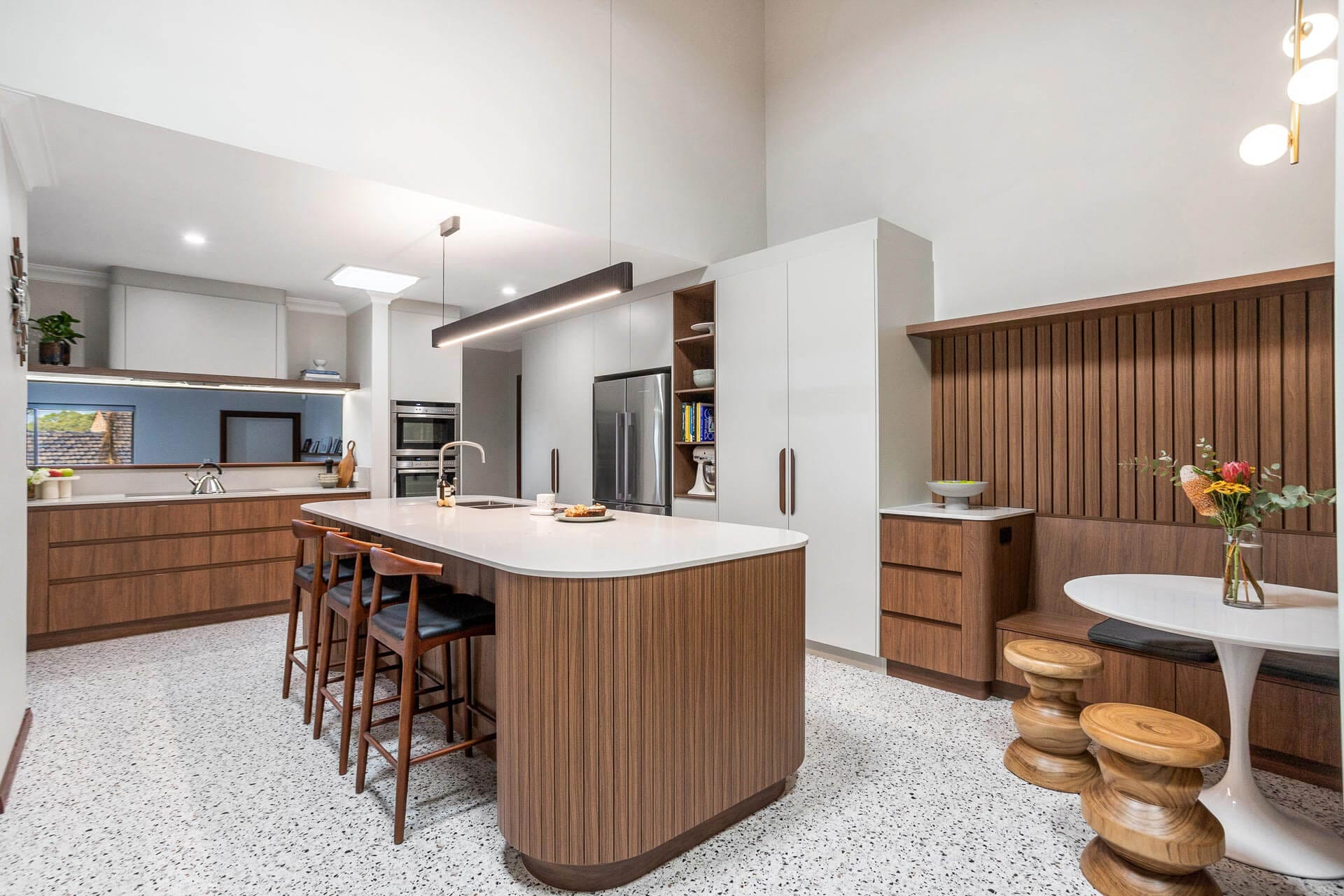
In a well-designed kitchen layout (as shown below in our Duncraig project) the island earns its place. It supports prep, storage, seating, and flow without dominating the space.
Galley kitchens with interrupted flow
Galley kitchens rely on clear, uninterrupted movement between two parallel runs. Problems can arise when this flow is broken.
This often happens due to:
- Appliance doors opening into walkways
- Poorly placed entry points
- Insufficient space between opposing benches
When not planned correctly, galley kitchens can feel congested rather than efficient.
Open-plan kitchens without defined zones
In open-plan homes, kitchens that aren’t clearly zoned can feel chaotic.
This may lead to:
- Cooking zones crossing with walk-through traffic
- Islands becoming thoroughfares instead of workspaces
- A lack of visual and functional separation
Good layout design defines zones clearly, even in open spaces.
Common kitchen layout issues and how to avoid them
Kitchen layouts play a crucial role in how a space feels and functions, especially as modern lifestyles continue to evolve. Here are some common issues to try to avoid in the planning stages:
Workflow inefficiencies between key zones
One of the most common layout issues is inefficient spacing between the sink, cooktop, fridge, and preparation areas.
When these zones are too far apart, too close together, or poorly aligned, cooking becomes tiring and disjointed. You end up carrying hot items across the room or doubling back unnecessarily.
A good kitchen layout creates intuitive movement between zones, reducing steps and improving safety.
Islands that block movement instead of helping it
Although kitchen islands are one of the most requested features, they are also one of the most commonly misunderstood features.
A poorly planned island can:
- Block walkways
- Interrupt appliance access
- Reduce prep space instead of adding it
- Feel oversized or undersized for the room
In these situations, the desire to include an island outweighs what the space can comfortably support, often leading to frustration long after the renovation is complete.
Not enough bench space where it’s actually needed
Sometimes, a kitchen layout can technically have enough bench space, but it’s in the wrong locations.
Small, broken-up surfaces or benches positioned far from cooking zones make everyday tasks harder. Prep space should sit between the sink and cooktop, not on the opposite side of the kitchen.
Good kitchen layout design considers how benches are used, not just how many metres are included.
Awkward appliance placement
Appliances placed without considering door swings, clearances, and user height are a major contributor to day-to-day frustration in the kitchen.
Common examples include:
- Dishwashers blocking walkways when open
- Ovens positioned too low or too far from prep areas
- Fridges that interrupt traffic flow when opened
Thoughtful appliance placement improves safety, comfort, and efficiency, especially in busy households. Considering appliance integration at the design phase can also do wonders for improving the flow of your kitchen layout.
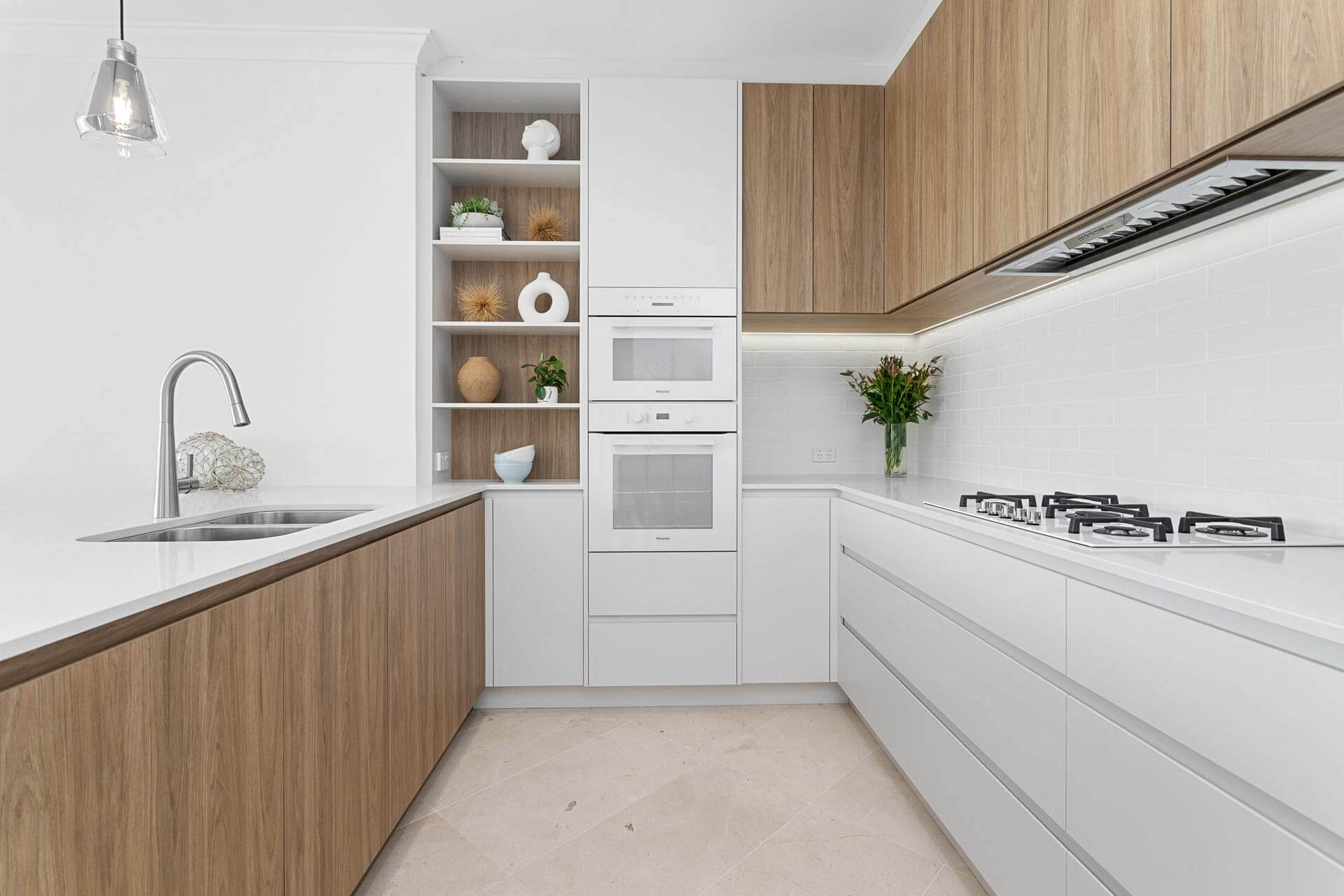
In our Cottesloe project shown below, two stacked ovens were integrated alongside surrounding cabinetry and wall storage to create a seamless finish that does not interrupt the layout or flow of the space. The white finish allows the appliances to blend in beautifully, contributing to a cohesive, intentional, and high-end result.
Storage that looks good but doesn’t function as well as it could
Open shelving and minimalist designs can look stunning, but without proper planning, they often sacrifice practicality.
Poor storage choices frequently include:
- Corner cupboards without functional storage solutions
- Overhead cabinetry that’s hard to reach
- Drawers that don’t suit what’s being stored
Good kitchen layouts design storage from the inside out, ensuring everything has a logical, accessible place.
When professional design advice isn’t part of the process
Skipping professional design advice can lead to layout issues that are hard to fix later, such as:
- Relying on inspiration images that don’t suit your space or lifestyle
- Poor workflow between cooking, prep, and cleaning zones
- Incorrect clearances around appliances, walkways, and islands
- Storage that looks good but doesn’t function day to day
A professional kitchen designer helps identify these issues early, ensuring your kitchen layout works efficiently, feels comfortable to use, and supports how you live now and into the future.
How a well-planned kitchen layout improves everyday living
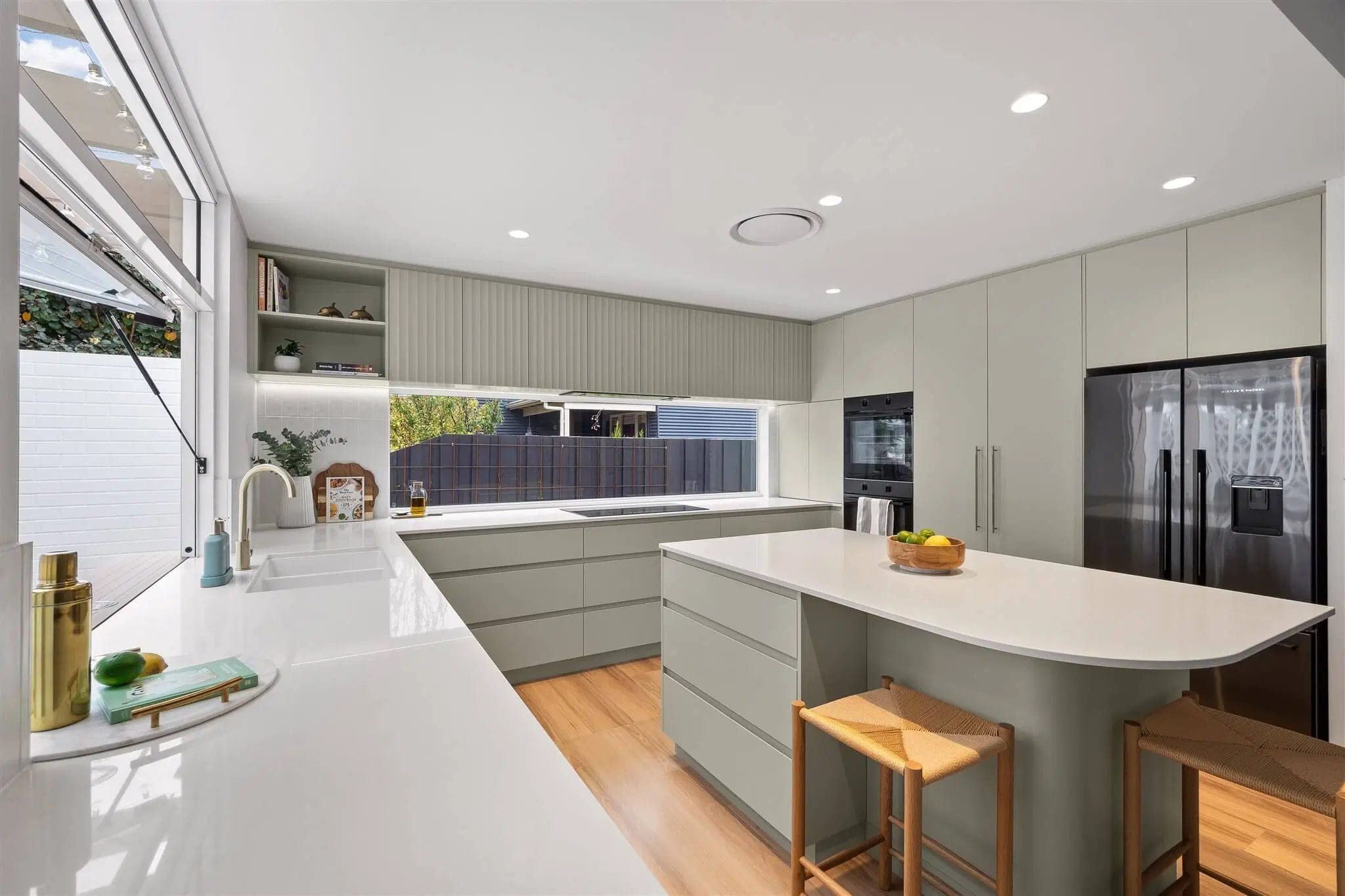
A good kitchen layout supports how you actually live, cook, entertain, and move through your home. It continues to work with you as you and your family evolve, adapting to changing routines, growing households, and the way you use your kitchen over time.
Well-designed layouts:
- Feel intuitive and easy to use
- Reduce unnecessary movement
- Improve safety and comfort
- Make kitchens feel calmer and more spacious
- Age well as household needs change
At The Maker Designer Kitchens, layout design is treated as the foundation of every project.
Before materials or finishes are selected, our kitchen designers focus on understanding your personal lifestyle, routines, and how the kitchen connects to the rest of your home.
To read more: What Happens When You Renovate With The Maker Designer Kitchens?

Designing a kitchen layout: What professionals consider
When designing a kitchen layout, our experienced designers look beyond trends and consider key aspects about the way you live and use your kitchen to create a bespoke layout that supports flow, functionality, and long-term usability.
Our key considerations include:
- Household size and cooking habits
- Traffic flow through the space
- Relationship to dining and living areas
- Storage requirements now and in the future
- Proportions, clearances, and ergonomics
This design-led approach is what separates a good kitchen layout from one that simply looks good in photos.
Why thoughtful layout planning makes all the difference
Unlike finishes, kitchen layout issues are difficult and costly to correct once a kitchen is built. Moving plumbing, power, cabinetry, or structural elements later often requires major rework and can be an expensive job.
Many homeowners visit our Perth showroom feeling uncertain. They know their current kitchen doesn’t work as well as it could, but they’re not always sure why. Seeing well-planned layouts in person helps you better understand what works and why.
Our kitchen designers are here to answer any questions, explain our process, and help you visualise what a good kitchen layout would look like in your home.
Ready to design a kitchen layout that truly works?
If your current kitchen feels awkward, inefficient, or simply harder to use than it should be, it’s often a sign the layout needs rethinking, not just a visual update.
At The Maker Designer Kitchens, we design kitchens that always consider the layout in the early stages. Our experienced designers take the time to understand how you live, cook, and move through your home, then translate that into a bespoke kitchen layout that balances functionality, flow, and considered design.
If you’re in the early research stage or ready to explore ideas in more detail, visiting our Perth showroom allows you to experience well-planned kitchen layouts in person and see how thoughtful design decisions make a real difference.
Visit our showroom, or get in touch with us to start planning a kitchen layout that works beautifully for the way you live.
Frequently asked questions
What are the biggest signs of an inefficient kitchen layout?
The biggest signs include poor flow, cramped walkways, awkward appliance placement, limited functional bench space, and storage that’s hard to access or poorly organised.
Can a small kitchen still have a good layout?
Yes. Small kitchens can function extremely well when the layout is carefully planned. Efficient zoning, smart storage, and correct proportions often matter more than size and can greatly enhance space efficiency.
Does a kitchen island always improve a layout?
No. A kitchen island only improves a layout if there is enough space around it and it serves a clear purpose. In some kitchens, removing or resizing an island improves flow significantly.
How do I know if my kitchen layout needs redesigning?
If cooking feels stressful, movement feels restricted, or storage doesn’t work for your needs, your layout likely needs improvement, even if the kitchen still looks visually appealing.
Should layout be planned before choosing finishes?
Absolutely. Layout decisions should always come first. Finishes enhance a kitchen, but layout determines how well it works long-term.